Class Calendar | Call admissions on 415-943-2028
Get free phlebotomy training—exclusively for eligible Amazon Associates / Find MA training at BAMA
Class Calendar | Call admissions on 415-943-2028
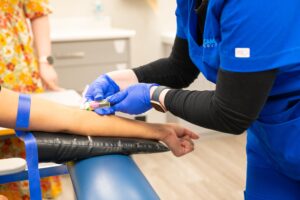
A phlebotomy career is an exciting opportunity for the bilingual individual who wants to turn their language skills into a career in healthcare. In the diverse San Francisco Bay Area, being able to speak more than one language is a distinct advantage when working with a multi-cultural patient population. From Spanish and Cantonese through to Mandarin and Tagalog, being multilingual can be a real asset to a phlebotomist in terms of being able to communicate with patients, reducing their anxiety and creating a much more welcoming environment. Here are seven reasons why a multilingual individual can be so effective working in healthcare as a phlebotomist.
Having the conversation in the patient’s preferred language will go a long way to building trust and making them feel at ease. Many patients are going to be nervous about having their blood taken. Having the conversation in their language will help to make it a more personal experience and will be reassuring.
Clear communication is key when you’re explaining to the patient what they can expect during a blood draw. Having a bilingual phlebotomist on hand can go a long way to help the patient understand the basic instructions and feel more at ease during the procedure.
The Bay Area is a very multicultural area with a huge variety of languages spoken. You’ve got San Francisco, Oakland, San Jose, Daly City, Fremont and all the other places in between, all with very diverse communities and patients for whom English is not their first language. Bilingual phlebotomists can bring an additional communication skill to clinics, hospitals, diagnostic laboratories, and other healthcare environments.
Not everyone is at ease with needles. For patients who are anxious about having a blood draw, having a phlebotomist on staff who can speak their language can be a big help in making the experience less daunting. Friendly chat and some clear explanation can make a massive difference in terms of helping the patient to relax.
Language is only one element of effective communication. An awareness of cultural differences can also be of great benefit to a healthcare professional in terms of being able to communicate with empathy and respect. A bilingual phlebotomist may be in a much better position to pick up on what a patient is comfortable with and to have a positive interaction.
Healthcare employers often prefer someone who has both technical skills and interpersonal skills. Being able to speak more than one language is an added qualification when you’re applying to be a phlebotomist in the Bay Area. It won’t get you the job necessarily, but it can be a differentiator.
If you already speak another language then why not combine that with some practical healthcare training? A phlebotomy career gives you the opportunity to use your language skills as well as learn how to take blood samples, how to carry out all the safety procedures and how to support patient care.
Ready to turn your passion for helping people into a healthcare career? BAMA Institute has monthly phlebotomy technician classes starting every month at both its San Francisco and San Jose campuses. The course includes classroom instruction, hands on lab work and a clinical externship to meet the requirements for California CPT-1 certification.
Whatever language you speak (Spanish, Cantonese, Mandarin, Tagalog etc.) your communication skills can be a real asset as you go about your healthcare journey.
Take the first step towards your future. Get in touch with us today to find out more about our training opportunities and how you can get started. Your second language could be the beginning of a brilliant new career!
"*" indicates required fields
© 2024 BAMA Institute. All Rights Reserved. Website by WindsAndWater