Class Calendar | Call admissions on 415-943-2028
Get free phlebotomy training—exclusively for eligible Amazon Associates / Find MA training at BAMA
Class Calendar | Call admissions on 415-943-2028
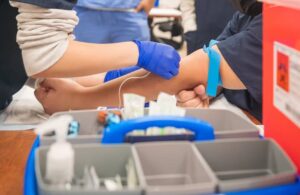
For some people, going back to school means finally pursuing the healthcare career they’ve been thinking about for years. And for some of those people, that career is phlebotomy. With the right phlebotomy training, you can take a practical step toward a rewarding career in the medical field sooner rather than later.
Phlebotomists are trained healthcare professionals who collect blood samples for laboratory testing, donations, and other medical purposes. However, there’s more to being a competent phlebotomist than solely drawing blood. You’ll need to communicate clearly with patients, follow safety procedures, properly identify and handle specimens, and help patients feel comfortable during the blood-drawing process. Attention to detail matters, too. A properly collected and labeled specimen is an important part of a patient’s successful care. For someone who enjoys helping others and wants a hands-on role in healthcare, phlebotomy can be a rewarding career choice.
Going back to school doesn’t have to mean committing to a traditional four-year college program. Career-focused training can provide a quicker and more direct way to learn the skills needed for a specific healthcare profession. Phlebotomy training allows students to focus on practical knowledge and techniques that can prepare them for the workplace in weeks, not years. This convenience makes training to become a phlebotomist especially appealing to adults who are changing careers, returning to education after a break, or looking for a new professional direction.
Phlebotomy students typically learn essential topics such as blood collection techniques, infection control, patient safety, specimen handling, and professional communication. Hands-on practice is particularly important because confidence comes with experience. During a reputable and accredited phlebotomy training program, hands-on phlebotomy skills usually be learned in on campus labs and on a clinical externship, where a student will for the first time learn how to interact with different types of patients.
Phlebotomy can provide more than technical experience. Training can help you develop communication (some people may be nervous about needles or having their blood drawn), organization, attention to detail, and patient-care skills that are valuable throughout healthcare. For some students, becoming a phlebotomist is the destination. For others, it may be the first step toward exploring additional healthcare careers like nursing.
If you’ve been waiting for the right opportunity to go back to school, this could be your moment. The U.S. Bureau of Labor Statistics reports approximately 139,700 active phlebotomy jobs. You don’t have to have everything figured out today. You simply need to take the first step. Contact us today about our employer-recommended phlebotomy technician course and take the next step toward a career as a phlebotomist.
"*" indicates required fields
© 2024 BAMA Institute. All Rights Reserved. Website by WindsAndWater